
Papakāinga
Case study features
-
Treating a small property as a Papakāinga model, providing affordable communal living for whānau
-
A two bedroom additional dwelling at 45 square metres with a tight proximity to the rest of the section
-
Whānau use from birth to death
-
Making your main home affordable through additional dwelling rental
Dwelling and property description
The Farrell whānau have added an additional dwelling to their main whare - a roomy two bedroom self-contained home. It has a separate lounge, kitchen and bathroom, and it includes a laundry and two wardrobes.
It’s close to their main house, with lots of outside decking and covered areas, and privacy is retained between the two dwellings.
As mana whenua Ngāti Haumia ki Paekākāriki, this is home to the late kaumātua Karl Farrell, his wife Beryl, their children, grandchildren and a large extended family.
Beryl has lived there for 45 years, and the whare has been in the whānau for 74 years. It has been the centre of many community and hapū gatherings.
The additional dwelling has been rented to their extended whānau and provided to their children over that time. It was renovated in recent years with help from the Paekākāriki Housing Trust, and continues to be in constant use.
A new septic tank was installed for both dwellings some years ago.
This secondary dwelling was finished in 1989, designed by a Pukerua Bay architect Wayne Forbes and built by Shane Merlin of Paraparaumu.
The project was approved by the then Department of Māori Affairs for a loan from the Housing Corporation which the whānau paid off over time.
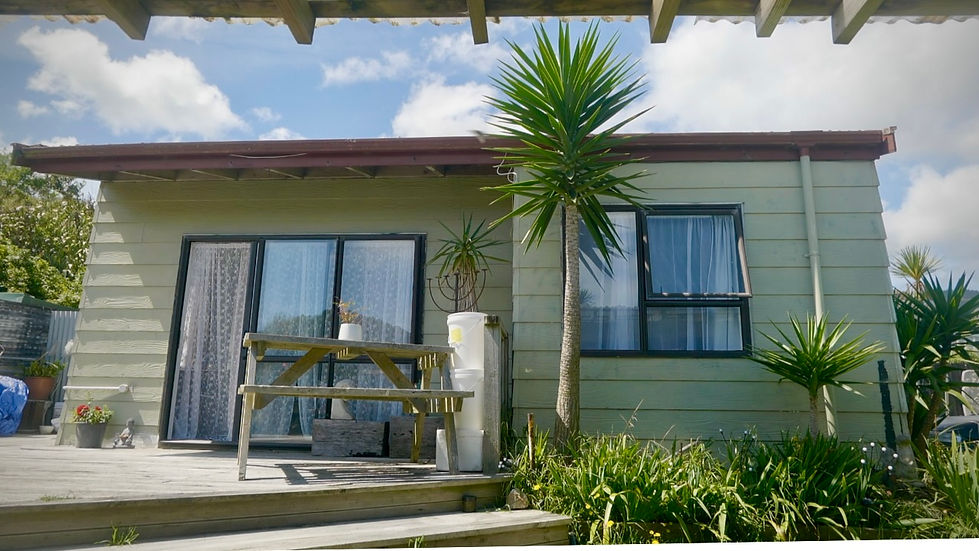
At that time the property was still owned by Karl Farrell’s mother, Kuia Jean Andrews, and developed for her as a granny flat, which she lived in until 1996.
“She passed away over there,” says Beryl Farrell, “We had a funeral here. Then two years later, we had a little baby born in the house….So that was nice, you know, from a sad beginning to a new beginning.”
“We've also had family bodies over there just because we haven't got a marae, and we treat this as our marae. It’s like it’s been there forever. It’s been a blessing. It’s been bloody good to us.”

Details
-
Size of additional dwelling: 45 square metres
-
Property size: 875 square metres (approximately)
-
Cost in 1987: $36,000 (CPI General Reserve Bank calculated inflation adjustment 2025: $93,723)
Tenants have their own power, gas and internet but Beryl pays for the water.
A 45 metre square footprint is sufficient for a comfortable, compact two-bedroom, one-bathroom home with a small kitchen and living area.

Motivations and Use
Part of having the additional dwelling, says Beryl, was about being able to afford to keep living in their home. Having something that was rentable but affordable. Beryl notes how hard it is for kids to afford their own place.
“You can kick people out there so they don't have to sleep in your house. Also I've just turned 65 and it's now more of an income because your rates are so high here. That money pays for my rates, my water and everything else that the council wants.”
“The way I see it is it's worth doing, worth looking into. These days you've got so many laws and regulations you have to get over."
“But just go for it.”
Beryl would be keen to put another smaller dwelling on the property.

Image: The main Farrell whare
History
Beryl Farrell: “When the Marines came to New Zealand, (Karl’s grandmother) Miriona (Budge) had a house in Queen Elizabeth Park, which was on her own land. They acquired it and she wasn't even given a house at that stage. She had to go and live in Jessie Street in Wellington.”
“When the Marines left, they didn't even offer the house back, but they did offer some land. So Miriona ended up having this particular piece of land, plus a couple in the street and a couple of other little bits of land up the road.”
“She came back here and built the house, had to pay for it through - I think it was at the time - Native Affairs. Then it went to Māori Affairs, then it went to Housing Corp. Then we had to go and get a loan because the interest was getting too big.”
“Karl lived all his life in Paekākāriki. In fact, Paekākāriki was his life. He loved his community. So we're still here.”
“We'll be here for a long time.“